

Before anything else: there are people who should not take a glandular supplement at all, and there is one question that matters more than any marketing claim on the bottle.
We'll get to both in the first two sections, because if you're researching glandulars you're probably trying to work out whether they're safe — not whether they're exciting. Most pages in this category have that backwards.
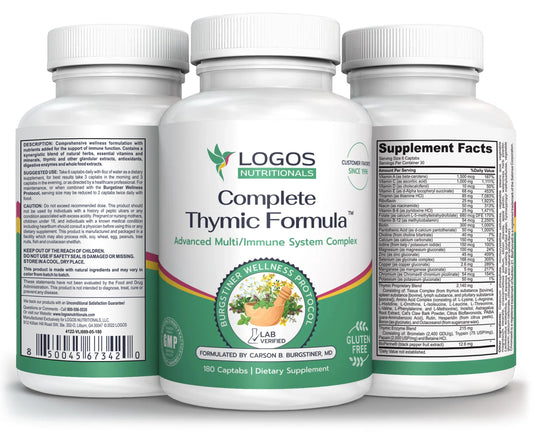
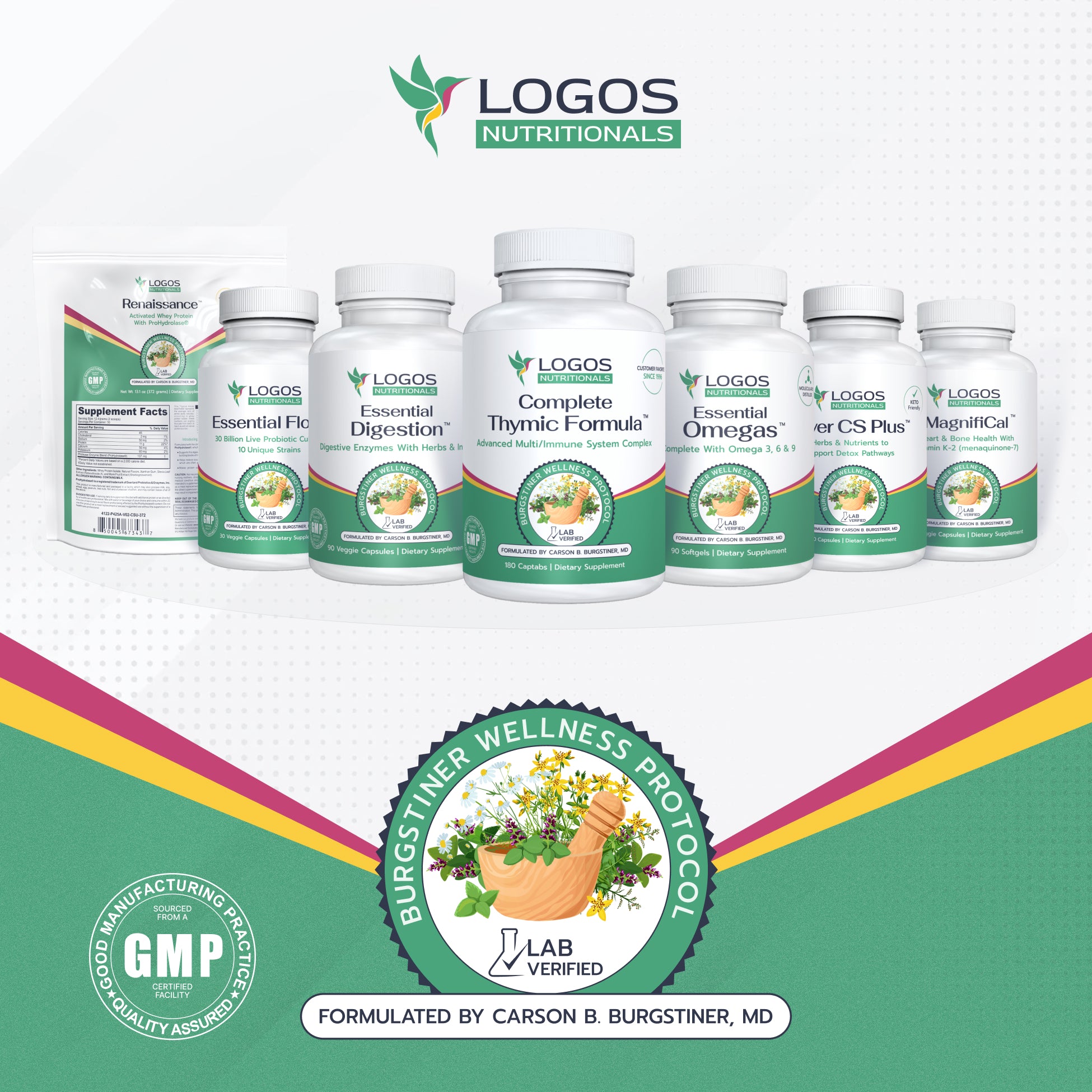
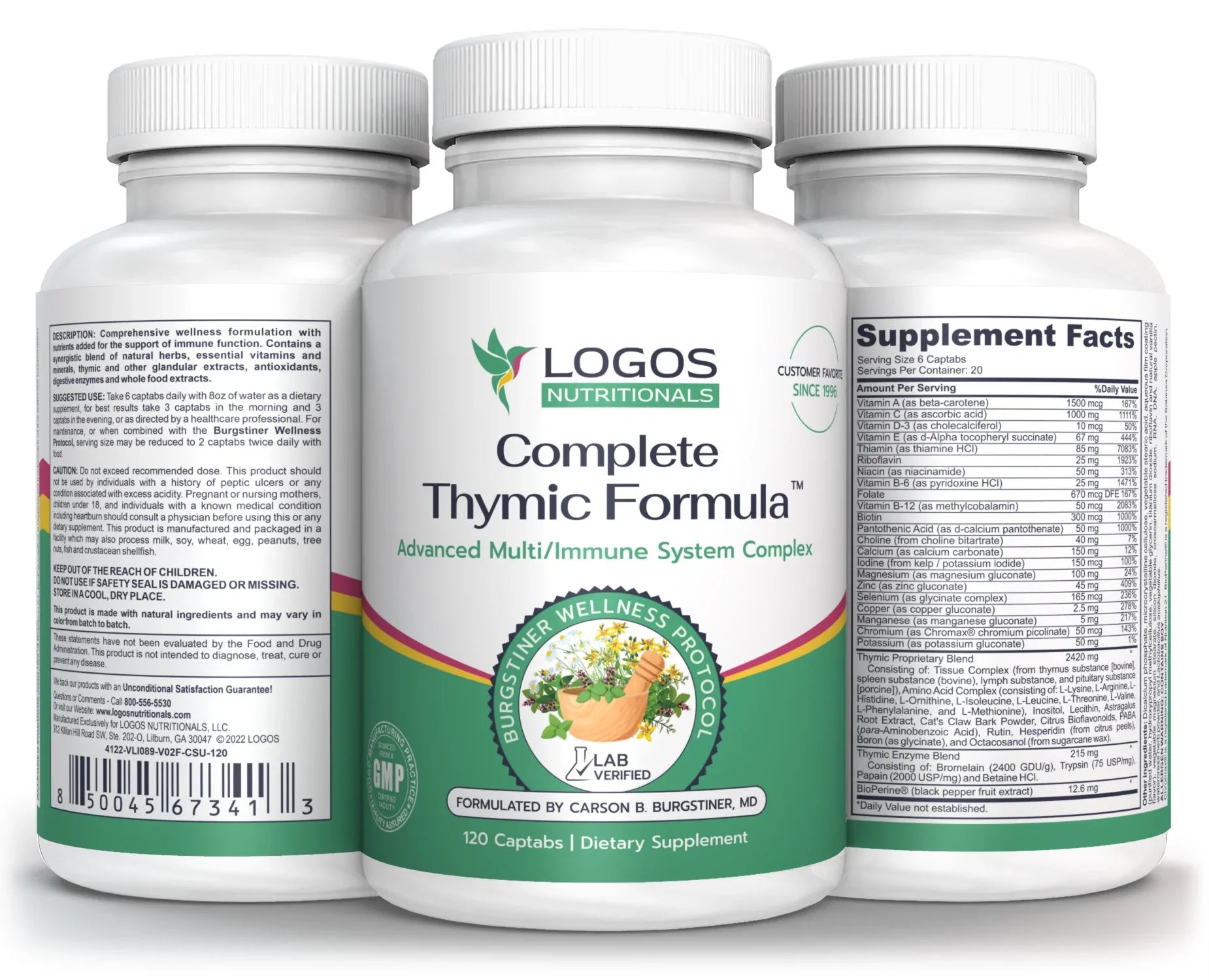
We make one. Complete Thymic Formula contains bovine thymus, spleen and lymph tissue, and it was formulated by a physician in 1996. So read this knowing we have a horse in the race. We think the honest version serves you better, and frankly it serves us better too — nobody builds a twenty-year customer base by overselling desiccated tissue.
What a glandular actually is
A glandular is animal tissue — usually bovine or porcine — taken from a specific organ, dried, defatted and powdered. Thymus, adrenal, liver, thyroid, spleen, pituitary, ovary.
The traditional idea behind them, which goes back well before modern supplements, is that tissue from an organ supplies the raw material and cofactors that organ uses. Eat thymus, support your thymus. It's the oldest form of nutritional therapy there is, and versions of it appear in most traditional medical systems.
That's the theory. What it is not is a hormone replacement, a drug, or a substitute for treatment of a diagnosed condition. Where a glandular product does contain meaningful hormone, that's a risk to manage rather than a feature — which is the next section.
The risks, first
Sourcing is the question that matters most
Bovine spongiform encephalopathy — mad cow disease — is caused by prions, and prions are not destroyed by the purification methods used in normal supplement manufacturing. Heat doesn't reliably do it. Filtration doesn't do it.
This is the single most important thing to know about buying a glandular, and it's why country of origin matters more than any other spec on the label. Tissue sourced from countries with a clean BSE record — New Zealand and Australia are the ones usually cited — carries a materially different risk profile than tissue of unstated origin.
Ask any brand where their tissue comes from. Including us. If a company can't or won't tell you the country of origin and the class of tissue, that answer is itself the answer. We're in the process of getting our own sourcing documented on our product pages, and until it's there you should hold us to the same standard as everyone else.
Some glandulars carry real hormone
This is the risk that actually sends people to the doctor, and it's specific to certain tissue types.
Thyroid glandulars can contain T3 and T4 — actual thyroid hormone. Taking them can push you hyperthyroid: palpitations, jitteriness, anxiety, insomnia, heat intolerance. If you already take thyroid medication, this is a genuine interaction, not a theoretical one.
Adrenal glandulars can contain cortisol. Sustained intake may suppress your own cortisol production and disrupt the HPA axis — the opposite of what someone reaching for "adrenal support" is trying to achieve.
Thymus, spleen and lymph tissue don't carry this particular problem in the same way, which is part of why immune-oriented glandulars have a cleaner risk profile than thyroid or adrenal ones. But "cleaner" is not "zero", and the general rule holds: if you take any prescription medication or manage any endocrine condition, this is a conversation with your doctor before it's a purchase.
Who shouldn't take them
- Pregnant or nursing — there's no reliable safety data. Don't.
- Beef or pork allergy — obvious, occasionally overlooked.
- Anyone on thyroid medication, before talking to their prescriber.
- Anyone managing an autoimmune condition — you're taking immune tissue; get advice.
- Children, without a practitioner directing it.
The everyday side effects
For most people without those contraindications, the realistic effects are mild and digestive: bloating, gas, changes in bowel habit, occasionally nausea. They usually show up in the first week or at higher doses, and usually resolve.
Some people report feeling jittery, dizzy or more fatigued when starting. That's most often a dose-too-high signal. Drop back, hold for a week, step up more slowly.
Do they actually work?
Here's where we part company with most of the category.
The human clinical evidence for glandular supplements is thin. There is a long history of practitioner use, a mechanistically reasonable rationale, and a great deal of anecdote. There is not a stack of randomized controlled trials. Anyone presenting glandulars as clinically proven is overstating it.
What can be said honestly: they're a concentrated source of the amino acids, peptides, nucleotides and cofactors present in that tissue. Whether those survive digestion intact and reach the corresponding organ is exactly the open question, and the honest answer is that it's debated.
So the reasonable framing is: plausible mechanism, long safety record for the non-hormonal tissues, thin trial data. That's enough to make glandulars worth trying if the rationale appeals to you. It isn't enough to promise you a result, and we won't.
How to evaluate a glandular supplement
Five questions, in order of how much they matter:
- Where is the tissue sourced? Country of origin, stated on the label or the site. This is the whole ballgame. No answer, no purchase.
- What tissue, and how much? "Glandular blend, 500 mg" tells you nothing. You want the specific organ and the specific amount.
- Is it hormone-bearing? Thyroid and adrenal need more caution than thymus or liver.
- Is it third-party tested? More meaningful here than in most supplement categories, because you're buying animal tissue.
- Is it a lone glandular or a complete formula? A glandular on its own is missing the vitamins and minerals the tissue needs to be used. That's the argument for formulas over isolates — and it's the design behind Complete Thymic Formula, which pairs thymic tissue with the full micronutrient base rather than selling the tissue alone.
Where Logos fits
Where our tissue comes from: the United States and New Zealand. The section above says to ask any brand this question, including us — so here is our answer. New Zealand is one of the clean-BSE-record countries named there, and the United States has held negligible-risk BSE status, the highest category, since 2013.
We don't sell adrenal or thyroid glandulars — the two categories with the hormone problem. Complete Thymic Formula uses thymus, spleen and lymph tissue inside a complete multivitamin-and-herb formula, and it's been made to the same physician's specification since 1996.
That's the honest scope of our claim: a practitioner-designed formula with a long track record, in the lower-risk end of the glandular category. Not a cure, not a proven therapy, and not the right choice for everyone on this page — see the contraindications above.
If you want the deeper background: the thymus and post-viral immune recovery, or the comparison most people actually want, thymic glandular vs thymic peptides.
Frequently Asked Questions
Are glandular supplements safe?
For most healthy adults, the non-hormonal tissues (thymus, liver, spleen) are generally well tolerated, with mild digestive effects the most common complaint. The real risks are prion exposure from poorly sourced tissue, and hormone content in thyroid and adrenal glandulars. Sourcing country is the single most important safety factor.
What are the side effects of bovine glandular supplements?
Most commonly bloating, gas, changes in bowel habit and occasional nausea, usually in the first week or at higher doses. Less commonly jitteriness, dizziness or increased fatigue, which usually means the dose is too high. Thyroid and adrenal glandulars carry additional hormone-related risks.
Do glandular supplements actually work?
There's a plausible mechanism, centuries of traditional use and a lot of practitioner experience — but the human clinical trial evidence is thin. Treat claims of proven effectiveness with scepticism regardless of who's making them.
Can glandulars affect your hormones?
Yes, specifically thyroid and adrenal glandulars. Thyroid tissue can contain T3 and T4 and can push you hyperthyroid. Adrenal tissue can contain cortisol and may suppress your own production. Thymus and liver glandulars don't carry the same hormonal risk.
Are glandular supplements safe during pregnancy?
No reliable safety data exists, so the standard guidance is to avoid them during pregnancy and breastfeeding unless a healthcare provider specifically directs otherwise.
What is glandular therapy?
The practice of using desiccated animal organ tissue to support the corresponding organ in humans. It predates modern supplements and appears in many traditional medical systems. More on the history here: glandular therapy, ancient wisdom and modern medicine.
How do I choose a glandular supplement?
Sourcing country first, then specific tissue and amount, then whether it's hormone-bearing, then third-party testing, then whether it's an isolated glandular or a complete formula. If a brand won't tell you where the tissue comes from, stop there.
These statements have not been evaluated by the Food and Drug Administration. This product is not intended to diagnose, treat, cure, or prevent any disease. This article is not medical advice — talk to your doctor before starting any glandular supplement, particularly if you take thyroid or hormone medication.