Nattokinase is a fibrinolytic enzyme isolated from nattō, the fermented soybean dish that has been part of Japanese diets for something like a thousand years. Fibrinolytic means it breaks down fibrin — the protein mesh that gives blood clots their structure.
That single property is why it has moved from a cardiovascular niche supplement to the foundation of nearly every post-viral recovery protocol circulating right now.
What it actually does
Most things marketed for circulation work upstream — they discourage clots from forming. Nattokinase is unusual because it works on fibrin that already exists in circulation, and because it appears to support the body's own clearing system rather than substituting for it.
Two mechanisms are described in the literature:
- Direct fibrinolytic activity — it degrades fibrin directly.
- PAI-1 inactivation — PAI-1 is the brake on your natural fibrinolytic system. Nattokinase appears to release that brake, letting your own machinery work as designed.
The second one is the more interesting of the two, and it's a genuinely different model from "take a blood thinner." You're supporting a system rather than overriding one.
Research also describes effects on blood pressure, lipids and platelet aggregation. A frequently cited study followed just over a thousand participants looking at atherosclerosis progression and lipid measures — unusually large for a supplement literature that mostly consists of small trials.
Why post-viral protocols are built around it
Here's the connection people are actually searching for.
One of the leading explanations for long COVID and related post-viral syndromes is microclotting — persistent small fibrin clots impairing oxygen delivery at the capillary level. It's attractive as a theory because a single mechanism accounts for the whole symptom cluster at once: fatigue, brain fog, exercise intolerance, the crash after exertion.
If that's what's happening, an enzyme that supports fibrin clearance is a mechanistically sensible thing to reach for. Which is exactly how nattokinase ended up as the base of the widely circulated protocols — most notably the McCullough base protocol, which pairs nattokinase with bromelain and curcumin.
Being clear about the state of the evidence: the microclotting hypothesis is a leading hypothesis, not settled science, and there are no large controlled trials of nattokinase for long COVID. What exists is a plausible mechanism, a real research base for nattokinase in circulation generally, and a lot of clinical and anecdotal use. That's enough to make it worth understanding. It isn't enough to call it proven, and we won't.
Dosing
Nattokinase is measured in fibrinolytic units (FU), not milligrams. This matters, because milligrams tell you the weight of powder and FU tells you the enzyme activity in it — and those are not reliably related between products.
Typical ranges from the literature:
| Dose | Context |
|---|---|
| 2,000 FU daily (~100 mg) | Most commonly studied; EFSA reported no adverse effects |
| 2,000–7,000 FU daily | Range used in adult studies, some for up to three years |
| 4,000 FU | Common commercial single-serving strength |
Take it on an empty stomach — with food, it's busy digesting your meal instead of working systemically. An hour before eating or two hours after is the usual guidance.
Rejuvenase provides 2,000 FU (100 mg) of nattokinase per capsule, 60 capsules per bottle — the exact dose most of the research uses. Label directions are 1 capsule, one to two times daily, between meals.
Allergen note: Rejuvenase contains soy. Nattokinase is derived from fermented soybeans, so this is true of every nattokinase product, not just ours.
Buy on FU, and be skeptical
This is the part most pages leave out, and it's the most useful thing on this page.
Independent testing of nattokinase products has found significant variability between labels and contents — some products delivering less than half their stated FU activity, others substantially more. Enzyme activity also degrades with heat and time, so manufacturing and storage genuinely matter here in a way they don't for, say, a mineral.
Practical implications:
- Compare FU, not mg. A 100 mg capsule and a 2,000 FU capsule are not different products described two ways. One tells you nothing about potency.
- A product that won't state FU is telling you something. Our label states 2,000 FU; the website didn't, which is a website problem we're fixing rather than a product one.
- Third-party testing is worth more here than in most categories.
Who should not take nattokinase
Read this section properly. Nattokinase has real pharmacological activity, and the same property that makes it interesting makes it genuinely inappropriate for some people.
Do not take nattokinase if you:
- Take anticoagulant or antiplatelet medication — warfarin, apixaban, rivaroxaban, clopidogrel, or regular aspirin therapy. The bleeding risk compounds.
- Have a bleeding or clotting disorder.
- Have a history of ischemic stroke.
- Have active peptic ulcer disease.
- Have surgery scheduled, or have recently had surgery. Stop well in advance and ask your surgeon how long.
- Are pregnant or nursing.
Talk to your doctor first if you take any prescription medication at all, have any cardiovascular diagnosis, or are managing blood pressure — nattokinase may lower it further.
We would rather lose the sale than have you find this out the hard way. If you're in any of the categories above, this product is not for you, and there's no version of the conversation where it becomes fine.
Side effects
For people without those contraindications, nattokinase is generally well tolerated. The reported effects are mild and uncommon: digestive upset, headache, and blood pressure running lower than usual.
The one to watch for is unusual bruising or bleeding — bleeding gums, nosebleeds, cuts that take longer than normal to stop. Any of those, stop and talk to your doctor.
Where it fits at Logos
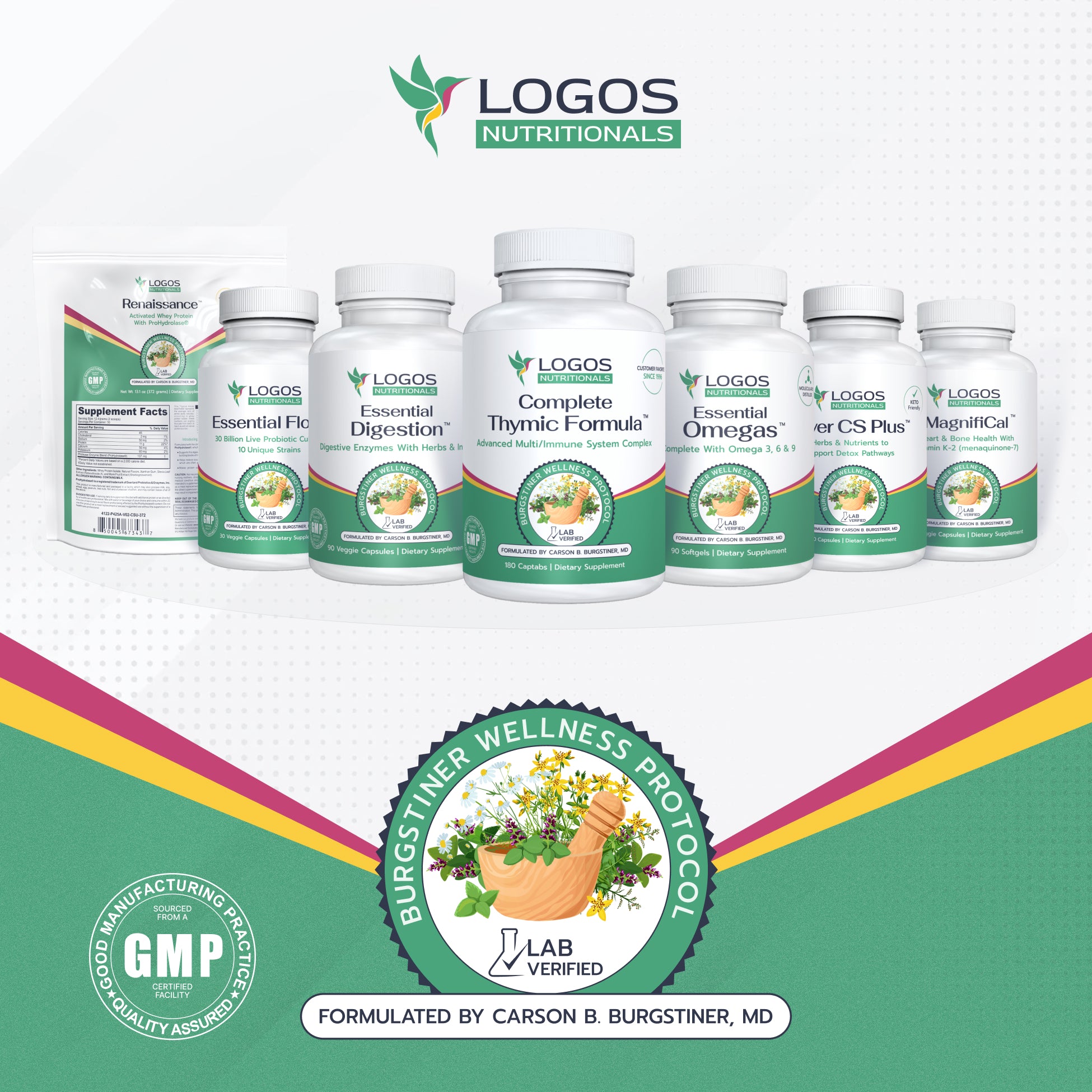
Rejuvenase is our nattokinase, and it's the foundation of the Long-Haul COVID & Post-Viral Recovery Protocol, which pairs it with NFlaStat for inflammatory support and Nitro Complex for circulation.
If you're following one of the three-part protocols circulating, the overlap is closer than it looks. The McCullough base protocol is nattokinase + bromelain + curcumin. Rejuvenase is the nattokinase. NFlaStat contains bromelain at 870,000 PU, alongside serrapeptase, papain and two other proteases. So the protocol covers two of the three components already.
Curcumin is the gap — we don't make one, and you'd source that separately. Saying so is more useful than pretending otherwise.
NFlaStat allergen note: contains milk, soy and wheat from its fermentation process.
More context: supplements for long COVID fatigue and brain fog.
Frequently Asked Questions
What does nattokinase do?
It's a fibrinolytic enzyme that breaks down fibrin — the protein that gives blood clots their structure — and supports the body's own fibrinolytic system by inactivating PAI-1, the brake on that system.
How much nattokinase should I take?
2,000 FU daily is the most commonly studied dose. Studies have used 2,000–7,000 FU in adults. Dose by fibrinolytic units, not milligrams.
Should nattokinase be taken on an empty stomach?
Yes — roughly an hour before eating or two hours after. Taken with a meal, the enzyme works on your food rather than systemically.
Can I take nattokinase with blood thinners?
No. Not without explicit medical supervision. Nattokinase has its own fibrinolytic activity and the bleeding risk compounds with anticoagulant and antiplatelet medication.
Does nattokinase break down spike protein?
This claim circulates widely. Some laboratory work has explored it, but it is not established in humans, and we're not going to state it as fact. What nattokinase has genuine research behind it for is fibrinolytic activity and circulation support.
How long does nattokinase take to work?
Circulation studies typically run eight weeks or longer before measuring outcomes. Give it a similar window rather than judging it in days.
These statements have not been evaluated by the Food and Drug Administration. This product is not intended to diagnose, treat, cure, or prevent any disease. Nattokinase can affect bleeding — consult your doctor before use, particularly if you take any medication.