There is no supplement that cures long COVID. Anyone who tells you otherwise is either selling something or hasn't read the literature.
What does exist is a growing body of research into specific nutrients that may support the systems long COVID disrupts — mitochondrial energy production, circulation, inflammatory regulation, sleep. Some of that research is genuinely promising. Some of it is one small trial that got a press release. This page tries to tell you which is which.
We sell supplements. You should read this with that in mind. We've tried to write the page we'd want to read if we were the ones exhausted at 3pm for the eighth month running.
The short version
The compounds with the most support behind them for post-viral fatigue and cognitive symptoms:
| Compound | What it's studied for | Evidence |
|---|---|---|
| Nicotinamide riboside (NR) | Fatigue, sleep, mood, executive function | Small trials, ≥10 weeks, encouraging |
| NAC | Cognitive symptoms — studied with guanfacine | One Yale study, small, notable |
| CoQ10 | Mitochondrial energy support | Preliminary, plausible mechanism |
| Omega-3 fatty acids | Inflammatory regulation, brain health | Strong general evidence, indirect here |
| Vitamin D | Immune regulation | Strong if deficient, unclear if not |
| Magnesium | Energy metabolism, sleep | Strong if deficient |
| Melatonin | Sleep disruption | Good for the sleep piece specifically |
| Alpha lipoic acid + vitamin C | Mitochondrial support | Used clinically, thin trial data |
Notice what that table doesn't say. None of these are established treatments. "Studied for" is not "proven to." Hold that distinction the entire way down this page.
Why long COVID is so hard to supplement for
Long COVID isn't one thing. That's the core problem.
Research has converged on several overlapping mechanisms, and different people appear to be driving different ones:
- Mitochondrial dysfunction — the cellular machinery that makes energy underperforms. This is the leading explanation for the specific quality of long COVID fatigue, which people describe as different from ordinary tiredness.
- Microclotting and endothelial disruption — small clots and damaged blood vessel linings impairing oxygen delivery. This is where the circulation-support angle comes from.
- Persistent immune activation — the immune response doesn't stand down after the infection clears.
- Autonomic dysfunction — the nervous system's automatic regulation goes haywire. POTS-like symptoms, heart rate that spikes on standing.
A supplement that supports mitochondrial function will do nothing for someone whose primary issue is autonomic. That's a large part of why the anecdotal reports are so contradictory — people aren't all treating the same problem.
Practical implication: match what you take to your dominant symptom rather than taking everything. And expect that finding what helps you involves some trial and error, because it genuinely does.
Mitochondrial and energy support
CoQ10 / ubiquinol
CoQ10 sits directly in the electron transport chain — the part of the cell that produces energy. That's a mechanistically clean rationale for the fatigue picture, and CoQ10 shows up in most long COVID supplement discussions for that reason.
The evidence specifically in long COVID is preliminary. The evidence for CoQ10 in mitochondrial support generally is much older and better established.
Ubiquinol is the reduced form, generally considered better absorbed, particularly over 40. Ours is Ubinol CoQ10.
Nicotinamide riboside
NR is a form of vitamin B3 that raises NAD+ — a coenzyme central to cellular energy that declines with age and appears depleted in some post-viral states.
This is the one I'd watch. Trials have shown improvements in fatigue, sleep, mood and some executive function measures, with a consistent finding that it takes at least ten weeks. Studies shorter than that tend to show nothing, which is a useful signal about how long to give it.
We don't currently make an NR product. Saying so seems more useful than pretending the category doesn't exist.
Magnesium
Magnesium is required for ATP to be biologically usable at all. If you're deficient, the energy effects are real and sometimes dramatic. If you're not deficient, supplementing does much less.
Worth testing rather than assuming.
Cognitive symptoms and brain fog
NAC
The interesting work here is a 2022 Yale study pairing N-acetylcysteine with guanfacine — a prescription medication — for cognitive symptoms. Participants reported improved energy and memory.
Two caveats that matter. It was small. And guanfacine is prescription-only, so the study doesn't tell you what NAC alone does. Bring it to your doctor as a conversation rather than treating it as a supplement recommendation.
Omega-3 fatty acids
DHA is a structural component of brain tissue, and the omega-3 evidence base for inflammatory regulation and cognitive health is one of the more solid ones in nutrition. Its evidence specifically in long COVID is indirect — inferred from mechanism rather than demonstrated in trials.
That said, it's a low-risk, broadly beneficial thing to be getting adequately regardless. Ours is Essential Omegas.
Circulation and the microclotting angle
This is where a lot of current attention sits, and it's the most mechanistically specific part of the long COVID picture.
The theory: persistent microclots impair oxygen and nutrient delivery, which would explain fatigue, brain fog and exercise intolerance simultaneously — a single mechanism producing the whole symptom cluster. That parsimony is a large part of its appeal.
Nattokinase is the compound most discussed here. It's a fibrinolytic enzyme from fermented soy that supports the body's own fibrin-clearing processes. It's the foundation of our Rejuvenase, and we've written it up in detail: nattokinase and post-viral recovery.
Read this part before you buy any nattokinase, ours or anyone's. Nattokinase has real pharmacological activity, which is exactly why it's interesting and exactly why it needs respect. Do not take it if you're on anticoagulant or antiplatelet medication, if you have a bleeding or clotting disorder, or in the period around any surgery. This is not a formality. Talk to your doctor first.
Immune regulation
Vitamin D
Vitamin D's role in immune regulation is well established, and deficiency is common — especially in people who've been too unwell to spend much time outdoors, which describes a lot of this population.
The honest framing: correcting a deficiency matters. Supplementing when you're already replete is much less clearly useful. Get a level tested rather than guessing. Ours is Vitamin D-3.
Thymic support
The thymus trains the T-cells that coordinate immune response, and it shrinks steadily with age. In a condition characterised partly by an immune system that won't stand down, supporting immune regulation rather than stimulation is the more sensible goal.
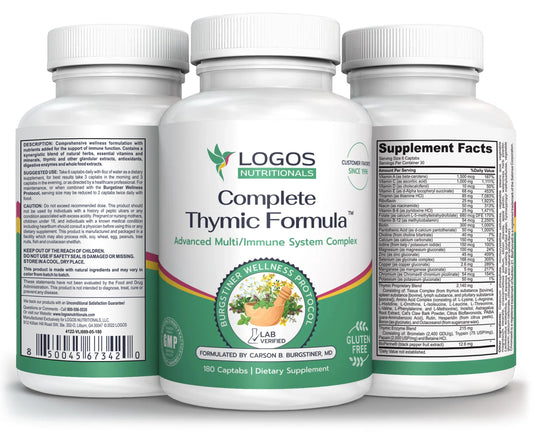
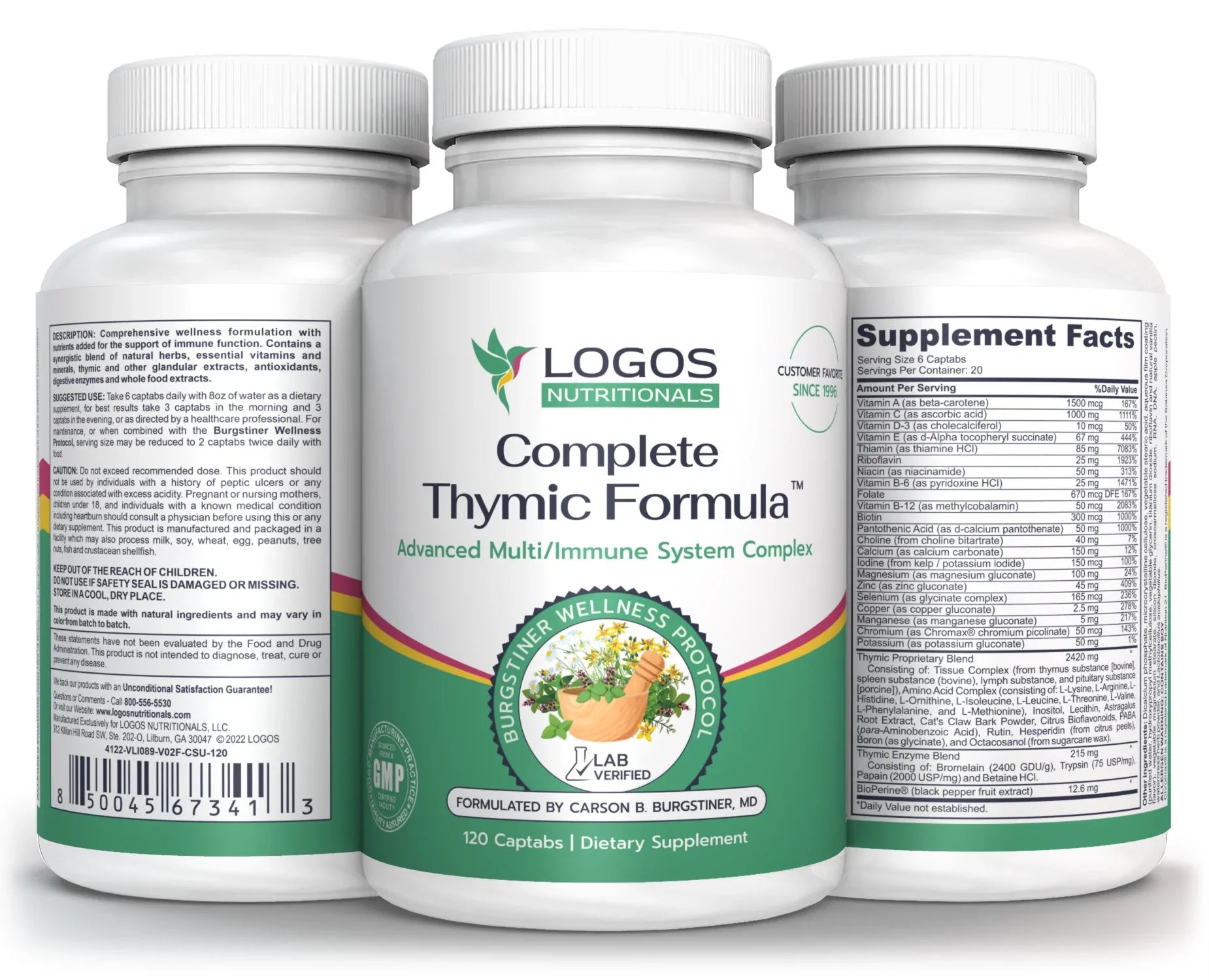
This is the area Dr. Burgstiner spent his clinical career on, and it's the reason Complete Thymic Formula exists. More here: the thymus and post-viral immune recovery.
Sleep
Worth its own section, because it's the one people skip and it may be the highest-leverage item on the page.
Sleep is when tissue repair and immune regulation happen. Long COVID frequently disrupts sleep, which impairs recovery, which worsens symptoms. It's a loop, and it's one of the few places where an intervention affects everything downstream.
Melatonin has reasonable evidence for sleep quality and onset. Magnesium helps some people. Fixing sleep first often makes it easier to tell whether anything else is working.
How to approach this without wasting money
Change one thing at a time. Starting six supplements at once means learning nothing about any of them. Add one. Give it a fair window. Then decide.
Give it long enough. The NR research suggests ten weeks. Most of this category needs four to eight weeks minimum. Two-week trials produce false negatives.
Test rather than assume for vitamin D, B12, ferritin and thyroid. Correcting an actual deficiency beats supplementing a hypothetical one, and you may find something that explains more than you expected.
Track something. A one-to-ten daily energy score in your phone. Memory is unreliable in exactly the way that makes you keep paying for things that aren't working.
Match the compound to your dominant symptom. Energy and post-exertional crashes point toward the mitochondrial group. Brain fog and cognitive symptoms point toward the circulation and omega-3 group. Poor sleep points at sleep first.
Involve your doctor, particularly with nattokinase, and particularly if you take any prescription medication.
Where we fit
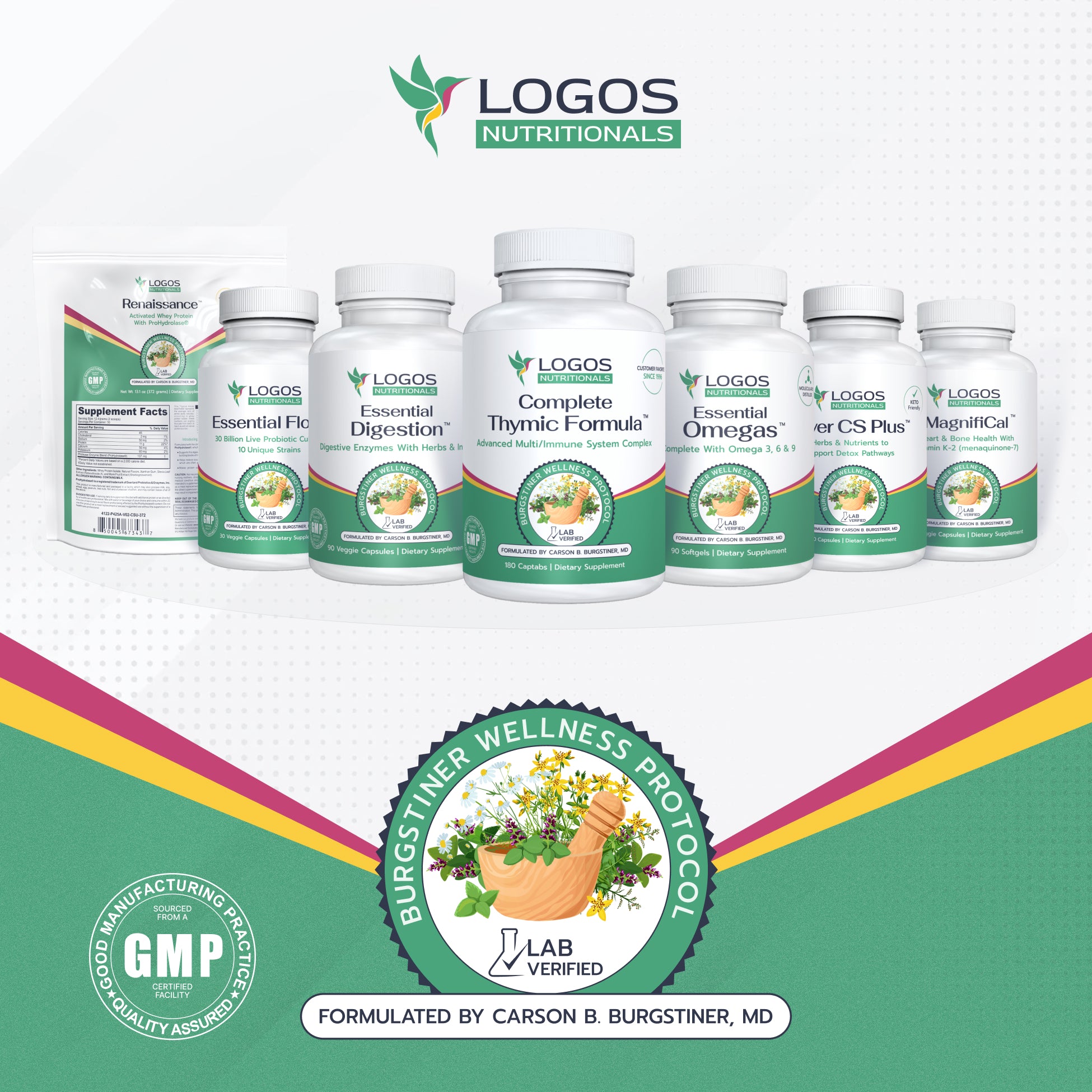
We make a Long-Haul COVID & Post-Viral Recovery Protocol built around circulation, inflammatory regulation and energy support — Rejuvenase, NFlaStat and Nitro Complex.
It supports those systems. It does not treat long COVID, and we won't describe it that way. If the circulation-and-inflammation mechanism is the one driving your symptoms, it's a reasonable place to start. If your primary problem is autonomic dysfunction or sleep, start somewhere else — the honest answer is that a different lever will serve you better.
Frequently Asked Questions
What is the best supplement for long COVID fatigue?
There isn't a single best one, because long COVID fatigue has several distinct underlying mechanisms. Nicotinamide riboside has the most encouraging recent trial data specifically for fatigue. CoQ10 has the cleanest mechanistic rationale. Which is right depends on what's driving your symptoms.
Do supplements actually help long COVID?
Some people report meaningful improvement; controlled evidence is limited and mixed. No supplement is an established treatment. The most reasonable framing is that certain nutrients may support systems the illness disrupts — worth trying methodically, not worth expecting a cure from.
How long before I know if a supplement is working?
Four to eight weeks for most. Nicotinamide riboside research suggests at least ten. Trials shorter than two weeks are essentially uninformative.
Can I take these supplements together?
Usually, though it makes it impossible to tell what's helping. The important exception is nattokinase, which shouldn't be combined with blood-thinning medication and needs a conversation with your doctor first.
Is nattokinase safe for long COVID?
For most healthy adults it's well tolerated. It is not appropriate if you take anticoagulants or antiplatelet drugs, have a bleeding or clotting disorder, or are near a scheduled surgery. Ask your doctor before starting.
Does vitamin D help with long COVID?
It helps if you're deficient, and deficiency is common in this group. If your level is already adequate, the benefit is much less clear. Test rather than assume.
What about spike protein detox protocols?
The widely circulated protocol combines nattokinase, bromelain and curcumin. Nattokinase's circulation and fibrinolytic support has the most research behind it of the three. The broader "detox" framing outruns the evidence, but the individual compounds are studied and the circulation rationale is coherent. For reference, our Long-Haul Protocol supplies the nattokinase (Rejuvenase, 2,000 FU) and the bromelain (NFlaStat, 870,000 PU); curcumin would need to come from elsewhere.
These statements have not been evaluated by the Food and Drug Administration. This product is not intended to diagnose, treat, cure, or prevent any disease. Nothing here is medical advice. Talk to your doctor, especially before taking nattokinase.