Your thymus is a small gland behind the breastbone, and it does one job that nothing else in the body can do: it trains T-cells.
T-cells arrive there immature and undiscriminating. The thymus teaches them to recognise genuine threats and — just as importantly — to leave your own tissue alone. Cells that fail either test are eliminated. What comes out is an immune system that responds proportionately.
Here's the part that matters after a viral illness: the thymus starts shrinking in adolescence and keeps going. By fifty it's largely fatty tissue. The process is called involution, it happens to everyone, and it's one of the better-understood reasons immune function changes with age.
Why this matters after a virus
Post-viral syndromes increasingly look less like "the virus is still there" and more like "the immune response never stood down."
That's a regulation problem, not a strength problem — and the distinction changes what you'd sensibly do about it. An immune system stuck in a low-grade inflammatory state doesn't need stimulating. It needs to regain the ability to tell threat from non-threat and modulate accordingly.
Which is precisely the function the thymus governs.
We want to be careful here, because this is where supplement marketing usually gets ahead of itself. The claim we're making is that thymic function is central to immune regulation, that it declines with age, and that immune regulation is implicated in post-viral illness. Those are well supported. The claim we are not making is that taking a thymic supplement restores thymic function or resolves post-viral illness. That isn't established, and the gap between the two claims is where a lot of this category loses credibility.
Where Logos comes into this
This is the question Dr. John Burgstiner spent his clinical career on.
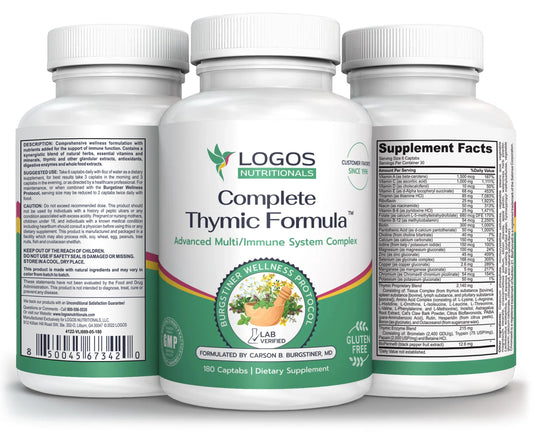
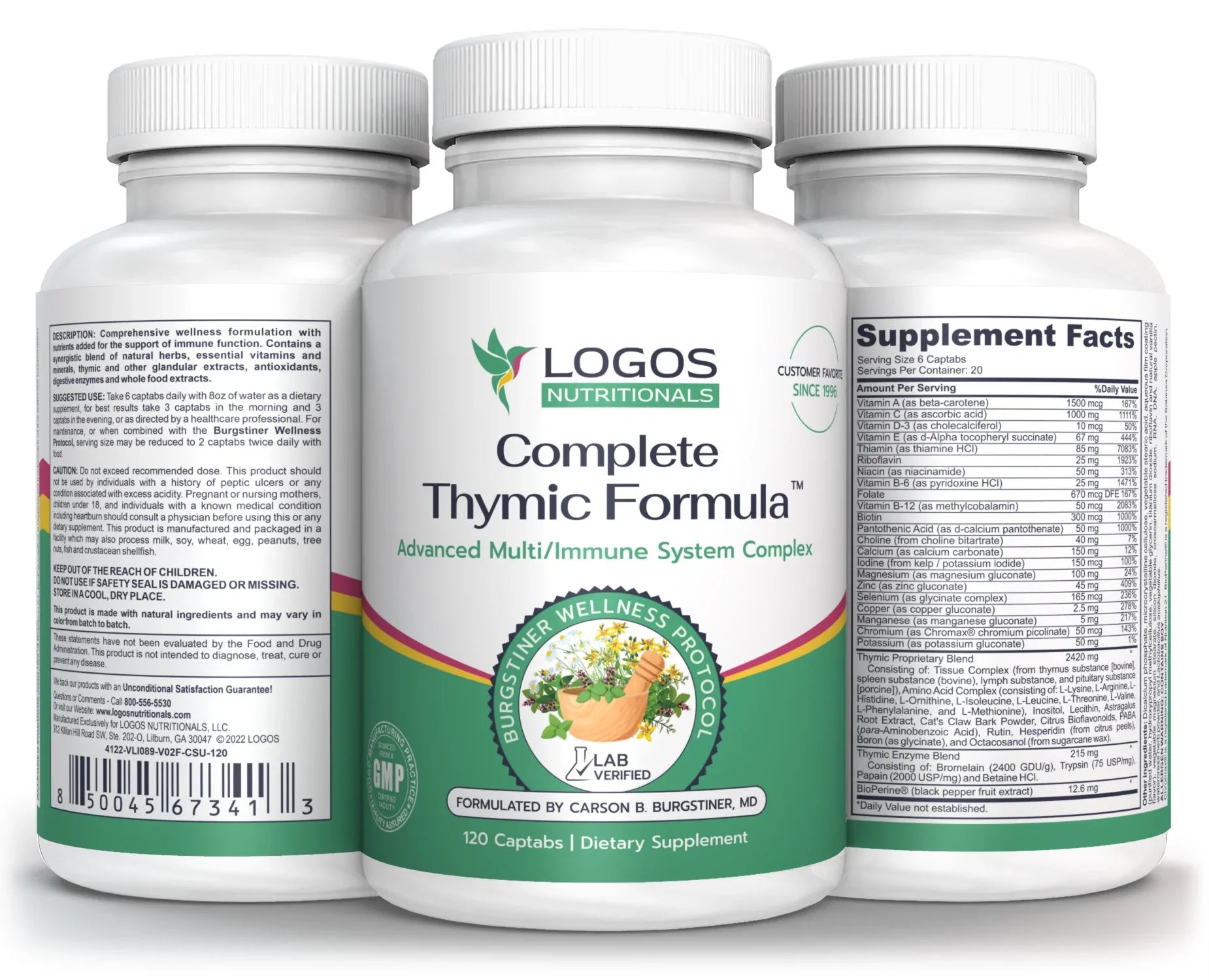
He was a practising physician — an OB-GYN — who became interested in immune function through patients whose problems didn't resolve with the standard approach. That work led to Complete Thymic Formula, and it's the reason this company exists at all. It wasn't a marketing decision about a trending category. It came out of a practice, and the formula predates most of the brands now selling thymus supplements by a couple of decades.
We think that's worth saying plainly, because in a category full of white-label products with a story invented afterwards, provenance is one of the few things a buyer can actually verify.
Glandular, peptide, or complete formula?
Three different things get sold as thymic support and they aren't interchangeable.
Thymus glandular — dried, processed thymus tissue, usually bovine. The traditional approach. Contains the tissue's own peptides and cofactors. Quality depends heavily on sourcing.
Thymic peptides — isolated peptide fractions such as thymosin alpha-1. The most research-supported option, but the well-studied versions are typically injectable and prescription-only. Oral peptide products are a different proposition from the injectable ones the research was done on, and the marketing frequently blurs that.
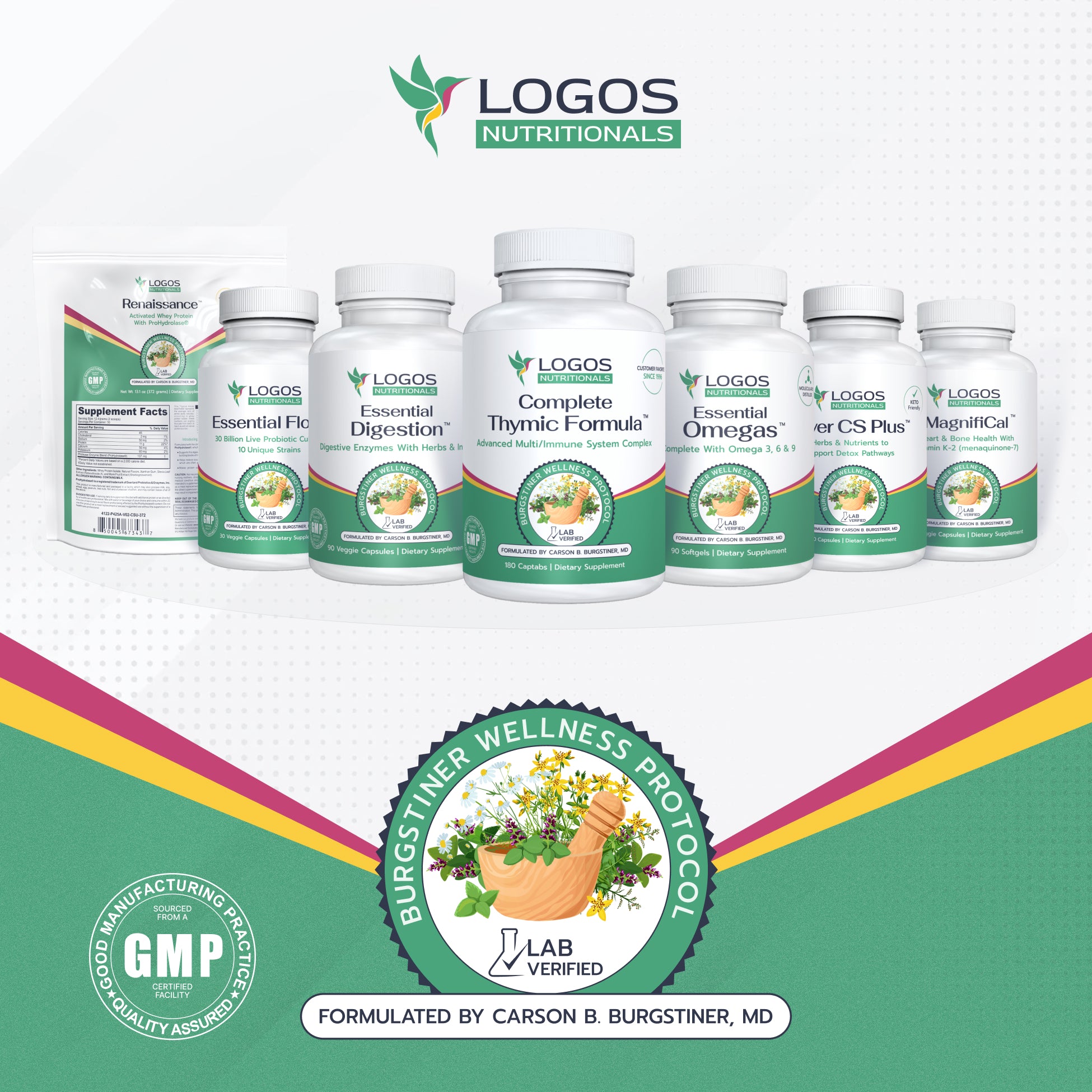
Complete formulas — a glandular combined with the vitamins, minerals and botanicals immune function depends on. The argument for this approach is that a glandular in isolation is missing the cofactors the system needs to use it. That's the design behind Complete Thymic Formula, and the reason it's a multivitamin, glandular and herbal formula rather than a single-ingredient product.
Fuller comparison: thymic glandular vs thymic peptides.
Supporting immune regulation without a bottle
The unglamorous things have better evidence than most supplements, and it would be dishonest to lead with the product.
Sleep. Immune regulation is substantially a nighttime process. Chronic short sleep measurably impairs it. If you're sleeping badly, that's the highest-leverage thing on this page and nothing on our shelf competes with fixing it.
Vitamin D. Genuinely central to immune regulation, commonly deficient, easily tested. Correct a real deficiency before supplementing anything speculative. Vitamin D-3.
Zinc. Required for T-cell development specifically. Deficiency is more common with age.
Blood sugar stability. Chronic hyperglycemia impairs immune function. Unglamorous, real.
Chronic stress. Sustained cortisol accelerates thymic involution — one of the more direct mechanisms by which prolonged stress affects immunity.
Setting expectations honestly
Thymic support is slow, cumulative and undramatic. Nobody takes it and feels a difference on Thursday.
If you're going to try it, give it three months of consistent use and judge it on the pattern across a season rather than on how any single week felt. And treat it as one input alongside sleep, deficiency correction and stress — not as a replacement for them.
If your primary issue is post-viral fatigue with a strong circulation or energy component, the thymic angle probably isn't your first lever. Start with supplements for long COVID fatigue and brain fog or the Long-Haul Recovery Protocol.
Frequently Asked Questions
What does the thymus gland do?
It trains T-cells — teaching them to recognise genuine threats and to tolerate your own tissue. Cells failing either test are eliminated. It's the source of immune discrimination rather than immune strength.
Does the thymus stop working with age?
It shrinks steadily from adolescence in a process called involution, and by roughly fifty is largely fatty tissue. It doesn't stop entirely, but output falls substantially.
Can you regenerate the thymus?
Some research has explored this, most notably a small trial using growth hormone and other agents that reported signs of thymic regeneration. It's early, small, and not something a supplement has been shown to do. Be skeptical of products claiming otherwise.
What's the difference between a thymus glandular and a thymic peptide?
A glandular is processed whole thymus tissue with its natural peptides and cofactors. A peptide is an isolated fraction such as thymosin alpha-1 — better researched, but the well-studied forms are typically injectable and prescription-only.
How long does thymic support take to work?
It's cumulative rather than acute. Give it around three months of consistent use and assess across a season rather than week to week.
These statements have not been evaluated by the Food and Drug Administration. This product is not intended to diagnose, treat, cure, or prevent any disease.