Short version: thymic peptides have better research behind them, but the well-studied form is injectable, prescription-only, not FDA approved in the United States, and its regulatory status has moved twice in the last two years. Thymus glandulars are available over the counter, have a long safety record, and much thinner trial data.
If you want the most evidence, and you're willing to work through a clinician and pay clinic prices for something whose availability may change, peptides. If you want something you can start this week and keep taking for a year, a glandular or a complete thymic formula.
Most people asking this question have already been quoted a peptide protocol price and are looking for what else exists. This page is written for them.
They are not the same category of thing
A thymic peptide is an isolated, defined molecule. Thymosin alpha-1 is the one that matters — a 28-amino-acid peptide, produced synthetically, dosed in micrograms, and studied in actual clinical trials. It is a pharmaceutical, and it behaves like one.
A thymus glandular is desiccated thymus tissue, usually bovine, dosed in milligrams. It contains the tissue's own mix of peptides, nucleotides, amino acids and cofactors, in whatever ratio the tissue had. It's a food-derived supplement, and it behaves like one.
One is a defined molecule with a dossier. The other is whole tissue with a tradition. That difference explains almost everything else on this page.
The regulatory situation, and why it keeps changing
This is the part people get wrong, and it's the reason the search volume exists.
Thymosin alpha-1 is not FDA approved in the United States. It is approved in more than 35 countries under the brand name Zadaxin, largely for chronic hepatitis B. Different markets, different answers.
In the US it has moved through the FDA's compounding categories more than once. As of a February 2026 reclassification it sits in Category 2 under the 503A bulk substances framework — available by prescription through licensed compounding pharmacies, but under tighter conditions, following an advisory committee review that flagged immunogenicity questions.
Verify the current status before you rely on any of that. This has been a genuinely moving target since 2023, coverage of it is often partisan in both directions, and it may well have shifted again by the time you read this. What is stable: it's prescription-only in the US, it's not an approved drug here, and access runs through a clinician.
That instability is itself a practical argument. A protocol you can only continue while a regulatory category holds is a different proposition from one you can buy indefinitely.
Head to head
| Thymic peptide (thymosin alpha-1) | Thymus glandular | |
|---|---|---|
| What it is | One defined synthetic molecule | Whole desiccated thymus tissue |
| Evidence | Clinical trials, international approval | Traditional use, thin trial data |
| Route | Injection (subcutaneous) | Oral capsule or tablet |
| Access in US | Prescription, compounding pharmacy | Over the counter |
| FDA approved in US | No | N/A — dietary supplement |
| Typical cost | Clinic-priced, often hundreds per month | Tens of dollars per month |
| Dose scale | Micrograms | Milligrams |
| Continuity risk | Regulatory status has shifted repeatedly | Stable |
| Main caution | Immunogenicity questions; needs supervision | Sourcing / BSE; see below |
What about oral peptides?
You'll see thymosin alpha-1 sold as an oral capsule or a sublingual. Be careful here.
The clinical research was done on the injectable form. Peptides are chains of amino acids, and the digestive tract is very good at breaking chains of amino acids into their parts — that's its job. An oral product may be a perfectly reasonable supplement, but it is not the thing the trials tested, and marketing that implies otherwise is borrowing evidence it hasn't earned.
If a page cites thymosin alpha-1 research while selling you an oral capsule, that's the specific sleight of hand to watch for.
Where a complete formula sits
There's a third option that this comparison usually leaves out.
A glandular on its own gives you tissue and nothing else. But the thymus needs zinc for T-cell development, vitamin D for immune regulation, and a broad micronutrient base to function — so tissue without cofactors is only part of the input.
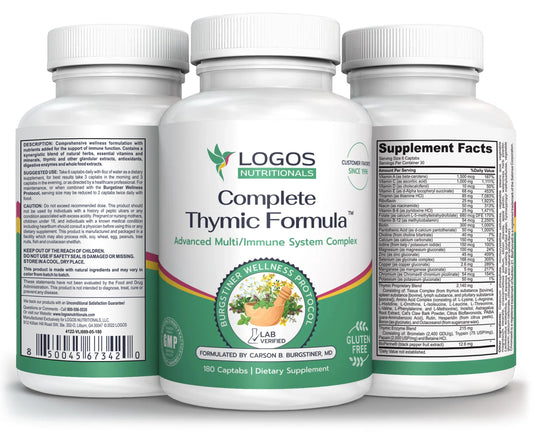
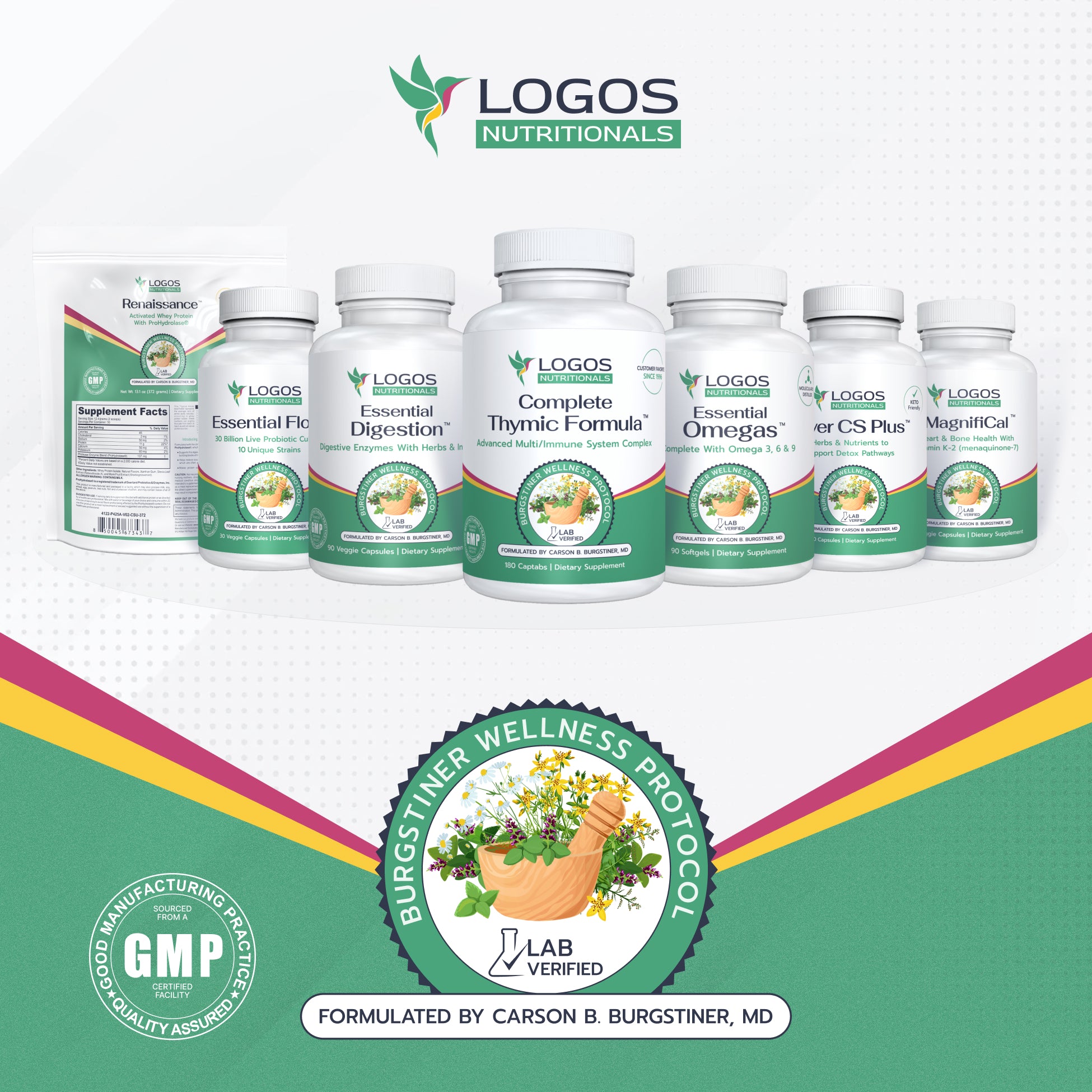
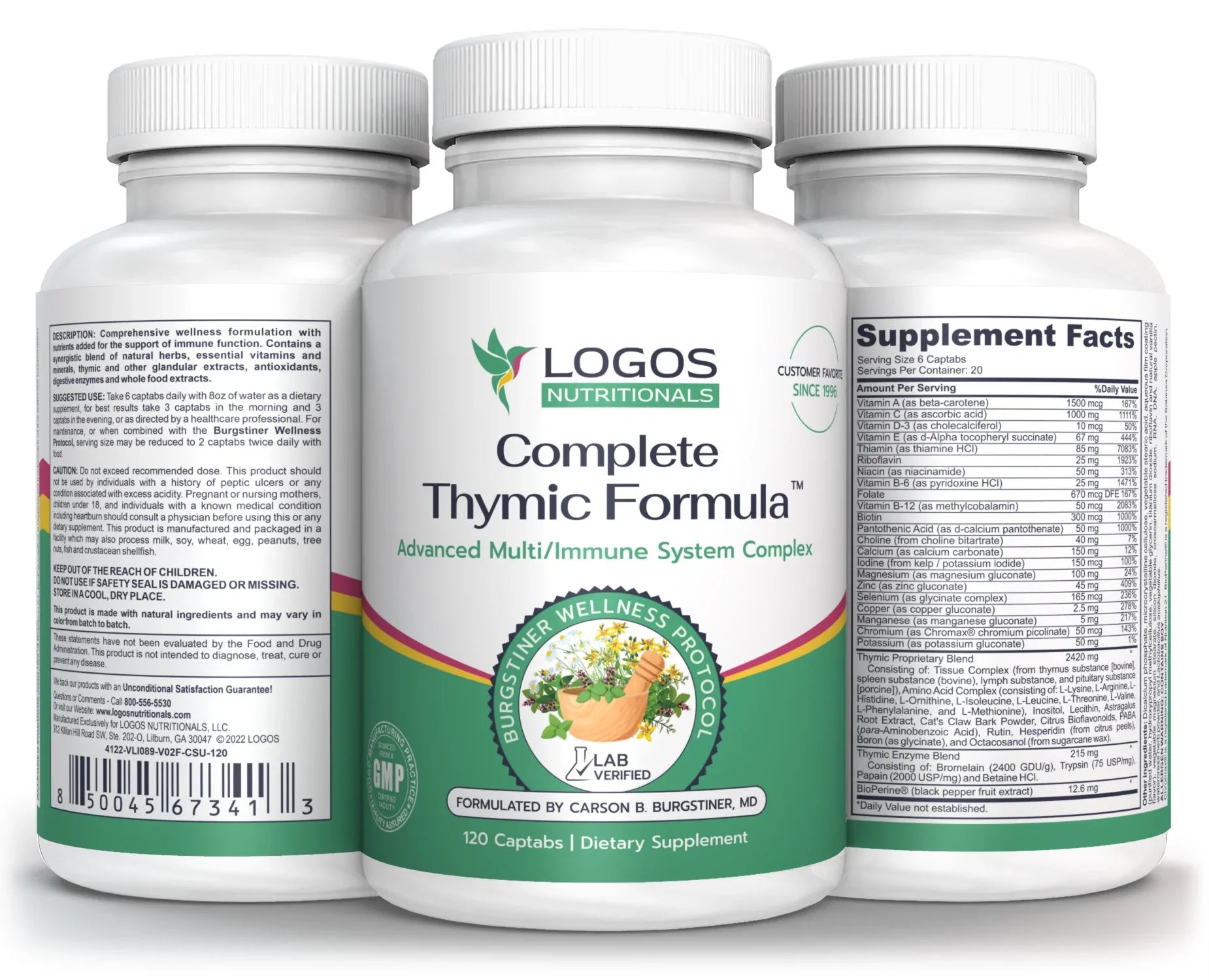
That's the reasoning behind Complete Thymic Formula: bovine thymus, spleen and lymph tissue inside a full multivitamin and herbal formula, rather than an isolated glandular. Carson B. Burgstiner, MD formulated it in 1996 and the specification hasn't chased trends since.
To be clear about what that is and isn't: it's a supplement with a long track record and a coherent design. It is not thymosin alpha-1, it has not been through clinical trials, and if your clinician has recommended peptide therapy for a specific reason, this is not a substitute for it.
Which should you choose?
Peptides make sense if you're working with a clinician who has recommended them for a specific indication, you can absorb clinic pricing, you're comfortable with injections, and you accept that availability may change.
A glandular or complete formula makes sense if you want general immune support rather than treatment of something specific, you want to run it for months rather than weeks, cost matters, or you simply aren't going to inject anything.
Honest answer for most people reading this: you came here after seeing a peptide clinic price. A complete thymic formula is the reasonable place to start — cheap enough to test properly over three months, safe enough to keep taking, and if it does nothing for you you've lost very little. If you later decide peptides are worth pursuing, that door stays open.
Neither is right if you're pregnant or nursing, or managing an autoimmune condition without medical supervision.
Before you buy either
For peptides: work through a clinician, ask what happens to your protocol if the compounding status changes again, and get the cost of a full course rather than a first month.
For glandulars: ask where the tissue is sourced. Prions are not destroyed by standard supplement processing, so country of origin matters more than any other spec on the label. We cover the full safety picture in our guide to glandular supplements.
Frequently Asked Questions
Is thymosin alpha-1 FDA approved?
Not in the United States. It's approved in more than 35 countries as Zadaxin, mainly for chronic hepatitis B. In the US it is available only by prescription through compounding pharmacies, and its compounding category has changed more than once since 2023 — check the current status rather than relying on any article, including this one.
What is the difference between thymus extract and thymosin?
Thymus extract is whole desiccated thymus tissue containing many compounds. Thymosin alpha-1 is one specific isolated peptide, produced synthetically and dosed in micrograms. Extract is a supplement; thymosin is a pharmaceutical.
Can you take thymosin alpha-1 orally?
Oral and sublingual products exist, but the clinical research was done on the injectable form. Peptides are broken down by digestion, so an oral product is not equivalent to what the trials tested — treat evidence borrowed from injectable studies with caution.
What is a natural alternative to thymosin alpha-1?
There is no over-the-counter equivalent, and any product claiming to be one is overstating. Thymus glandulars and complete thymic formulas are the usual alternative people choose — different category, much lower cost, far thinner evidence.
How much does thymosin alpha-1 cost?
It's clinic-priced and varies widely by provider and protocol, commonly running to hundreds of dollars a month. Ask for the cost of a full course rather than the first month.
Is a thymic glandular as good as a peptide?
No, if "as good" means as well studied — peptides have real clinical trials behind them and glandulars do not. Glandulars win on access, cost, safety record and the ability to keep taking them indefinitely. They answer different questions.
These statements have not been evaluated by the Food and Drug Administration. This product is not intended to diagnose, treat, cure, or prevent any disease. Nothing here is medical advice. Regulatory status described as of August 2026 — verify current status independently.